With “Unchained,” Didier Paradis used a compact stereoscopic 3D rig, built around the Blackmagic PYXIS 12K digital film camera, and live 3D monitoring to test how depth, convergence and choreography could be judged while performers were still on set.
“Unchained” is a four minute dance film exploring violence against women, shot in a single day with a volunteer crew. It was also, by design, a proof of concept: a test of whether a compact, independent stereoscopic HFR workflow could function outside a major production, with dance chosen specifically because its speed and physicality would push that workflow as hard as possible.
Dateline Didier Paradis has been interested in high frame rate stereoscopic filmmaking for some time. With “Unchained,” a four minute dance film choreographed by Eva Guillotin and performed by nine dancers, he had a contained projectto explore the topic of on set monitoring, with dance chosen specifically because of its speed and physicality, which would push that workflow.
In many stereoscopic workflows, creative and comfort issues only become fully apparent when the left and right eye images are properly viewed together. Paradis wanted to avoid treating that review as a later stage process.
“We could have shot everything and only discovered later whether it worked,” Paradis explained. “However, for this project, the important thing was to make decisions while the dancers were still there.”
The film follows a woman trying to escape an abusive relationship and was captured at 8K/60fps using a compact stereoscopic rig built around the Blackmagic PYXIS 12K digital film camera.
Dance made the test especially useful noted Paradis: “Performers moving through the frame, reaching towards the camera and constantly changing their distance from the lens would tell us whether our approach to monitoring was working as intended.”
“For me, the camera is only one part of the question,” Paradis said. “Whether you are shooting VR 180 with a dedicated immersive system or working with a traditional stereoscopic rig, at some point you still need to know what the 3D image is doing on set. That was what I wanted to test.”
Building the Rig
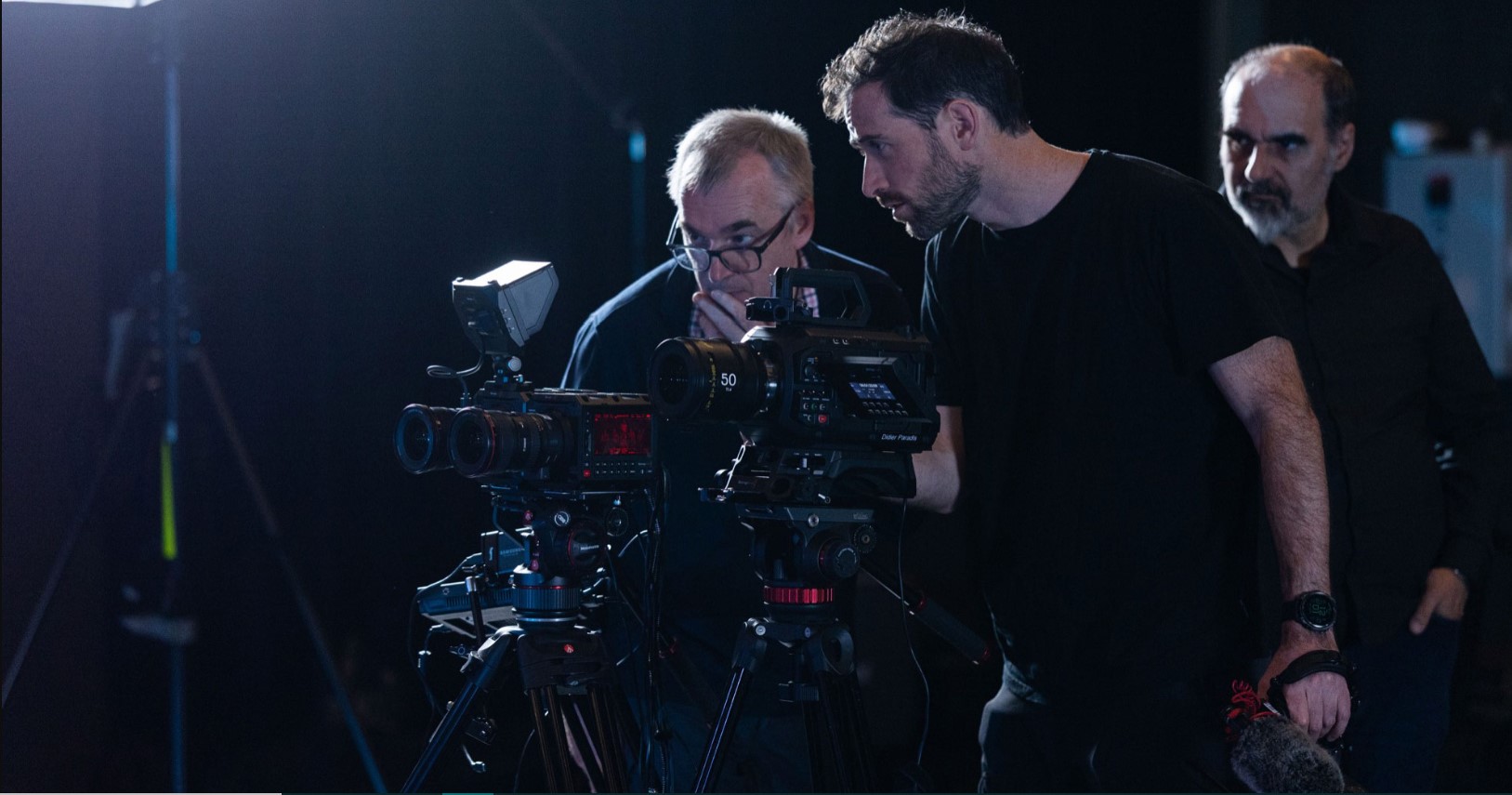
Paradis initially considered using bigger cine camera bodies he already owned, but when placed side by side, the lenses would have been too far apart. “With the larger bodies, the interaxial distance was too much,” Paradis explained. “I didn’t want to go to a mirror rig for this project. It would have made the whole shoot heavier and more complicated.”
The PYXIS 12K offered another route. Its box style form factor allowed the stereo pair to sit side by side in a manageable rig.
Paradis also developed a custom control application using Blackmagic Design’s API, linking the rig over a local network so that aperture, ISO and white balance changes could be applied across the stereo pair. “It meant the two cameras could behave much more like one system,” he said. “On a shoot like this, that saved us time and helped avoid mistakes.”
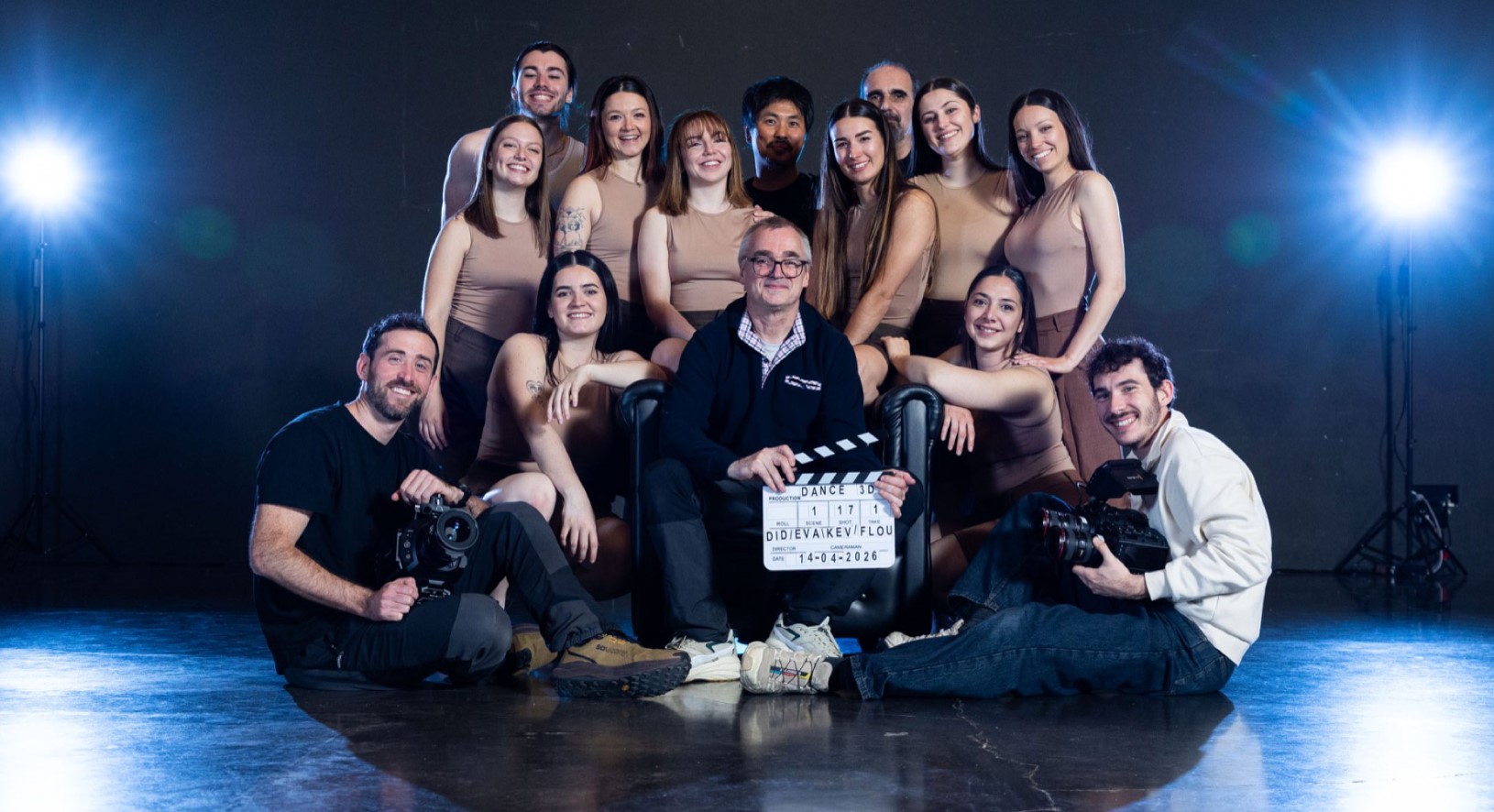
With only one day on location, the project had to be prepared remotely in advance between Paris, Tours and Bordeaux. Guillotin sent rehearsal clips from her phone and composer Eric Soulas wrote the score.
Monitoring in 3D
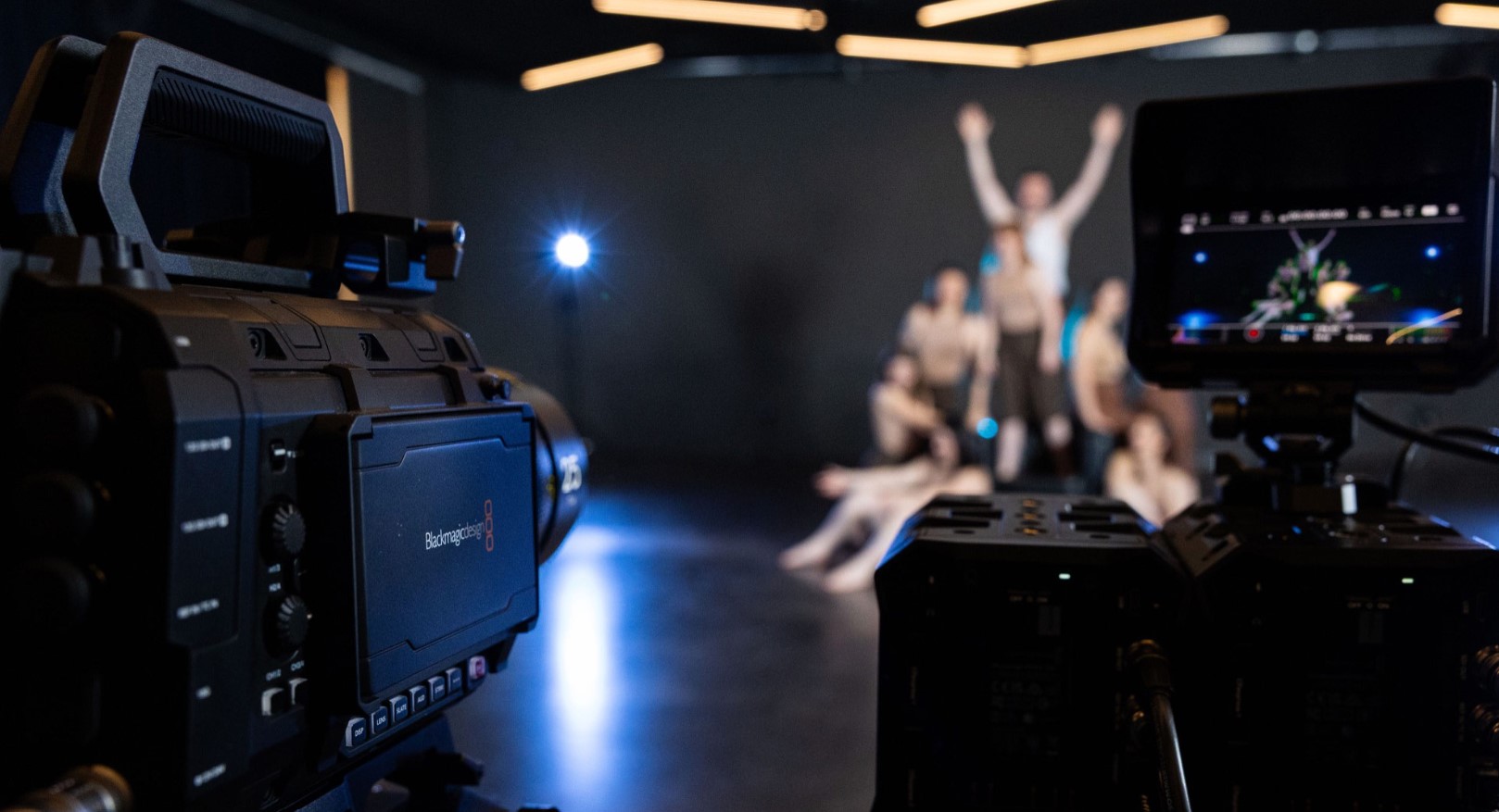
The stereoscopic monitoring setup came together after Paradis had met Sony’s Takeshi Hiramatsu at the Courant 3D festival in Angoulême. Hiramatsu was demonstrating Sony’s Spatial Reality Display ELF-SR2, 4KHDR glasses-free 3D monitor, and when he heard about “Unchained,” offered to bring the display to the shoot.
“On a normal monitor I could judge focus, exposure and framing,” Paradis said. “What I couldn’t judge properly was the distance: whether a hand was coming far enough forward, whether the dancer was too close or too far away, or whether the convergence felt right.”
Hiramatsu brought the Sony display to the shoot, where it stayed in use throughout the day as the team’s live reference for the combined stereo image. A HyperDeck Shuttle 4K Pro broadcast deck was connected to the setup, giving Paradis and Guillotin near immediate 3D playback between takes.
Between takes, Guillotin could stand with Paradis at the monitor and watch the choreography back in 3D. “Eva could see if the position of the dancers worked in depth,” Paradis said. “It meant we were not only discussing the movement; we were looking at it together.”
One of the clearest examples came with the reaching hand shot, an image Paradis had planned from the start. “It looked right on the floor,” he said. “But on the 3D display, the hand was not far enough forward, and it needed more light. So we moved the dancer, adjusted the camera and shot it again.”
The monitor also changed his view of a high angle shot looking down at the female dancer seated in a chair. “In 2D it looked quite simple,” he said. “In stereo there was more separation. It made her feel more alone in the frame.”
Festival Showcase
With post production completed in DaVinci Resolve Studio, Paradis screened “Unchained” for students at a dance conservatory in Chartres using a VR headset. He was looking for technical feedback, but the first response was to the subject.
“They were all very moved,” he said. “The subject really struck them.”
Some responded more to the close ups, others to the wider shots, but the reaching hand moment was understood by everyone. Several also noted that the story does not leave the woman trapped; she escapes and finds support.
“Unchained” now screens at Courant 3D in Angoulême, the festival where the project began. Paradis is already discussing a follow up with the Chartres conservatory, with several of the dancers asking to be involved again.